In case you did not know it, today is the birthday of the guy who invented many of the concepts we might consider central to our hobby. I mean little things like the concept of a individual player character, experience points, dungeons and so on.
He was also one of the inspirations that made me start this blog (Yeah, I know I have not posted much lately. There will be more one day...)
Today I raise a glass to the memory of Dave Arneson!
Showing posts with label Dave Arneson. Show all posts
Showing posts with label Dave Arneson. Show all posts
Thursday, October 1, 2015
Monday, September 29, 2014
Old D&D editions and clones - D@D
The second of the old D&D editions and clones is Dragons At Dawn. I find gaming archaeology to be a fascinating subject, and the very dawn of the RPG hobby is that Final Frontier before we go into the Great Beyond. Naturally a game that tries to reimagine how Dave Arneson's game looked like in the years before D&D would pike my interest. Does it hold up?
My first thought is, who in their right mind would lay out a book all in a non serif typeface?
Anyway.
The book starts with classes, traits and XP tables for the different classes. It's kind of the way you expect it to be done, with the focus being on how to get a character ready for adventure and then you get into rules systems and how to set up a game. Interestingly enough, this game that has as its express intent to model the early game of Dave Arneson before D&D, is sometimes just as quirky and jumbled as OD&D is sometimes accused of being. You would think it should be presented in a more ordered fashion, or modern if you like. If you wonder what I mean by that, I might give as example that the XP tables doesn't mention that you reset XP after each level. That is mentioned much later in the book, in the section about how you get experience. Why is that much later in the book anyway?
This book is by intent trying to be faithful to a source that in many is no longer around, so it's maybe natural that it sometimes feel disjointed. The author actually say it demands to be house ruled. But, I still wonder a bit about the presentation.
The second half of the book, after characters, lists equipment, monsters and how to run a campaign. There are some interesting ideas in here, with random events for the campaign year and magic spell preparations that takes months! Just like OD&D the bigger picture is part of the game.
How does it feel having read it once more? Well, I like the quirky character classes with their unusual abilities. I like the magic system which is based on physical components, more like alchemy, and also the spell point system. But, here is also where one of Dave Arneson's stupidest ideas really makes me cringe. You see, magic is always touched by the alignment of the creator, and if you touch a magic item of a different alignment than your own you will suffer some bad effects. If all magic is powders, potions and "technomagic" gear in the style of Tekumel how can it have an alignment? If it's some other planar energy it is easier to grasp, but since this kind of magic is kind of like misunderstood technology, how can it have an alignment? I mean, a laser pistol? I guess the defenders of the alignment curse will figure out some explanation...
Do I want to play this game? Yes, I want to. The combat rules where the characters feels more like toy soldiers than any other role playing game and might run away if you fail a morale check, does it work? Yes, I like it. The saving roll system where you on the spot and depending on the situation rolls against a stat, does it work? Yes, I like it!
This game is so different from any other D&D game I at once become intrigued. Also, the combat system makes more sense that D&D ever did, and I really like some things like the negative AC of an undead being matched to the amount of bonus you need on your weapon to hit. Stocking dungeons and other adventures using Protection Points, which you then "buy" up as HD when stocking and restocking is cool. Having to spend your hard earned treaure to get XP for it is also a fabulous idea. There are some really elegant design gems in there.
Even though the idea of more retro games made me sigh, reading Dragons At Dawn once more makes me perk up and want to run a game, like it's 1971 once more...


Tuesday, April 2, 2013
Thinking back on 7th Sea
I ran a short arc of a revenge story in AEG's 7th Sea a few years back. The idea of swashbuckling is seldom far from my gaming thoughts, and the game system had enough interesting knobs and dials for me to long to try it out.
When I had decided I wanted to run it, and had read the books, a new problem appeared. The game was set in an imaginary Europe with new names for everything, and magic to boot! I liked the idea of filing off the serial numbers. I remembered that Dave Arneson had thought that taking the adventure into fantasy was a great way to stop arguments about historical minutiae, that was not the problem. The magic on the other hand, was.
For some reason I wanted a regular world, with none of that "gamey stuff". I wanted exciting fencing and swinging in chandeliers, but no fireballs. I also decided to ditch the culture inspired by ancient Norse culture. Those are always corny when done by Americans.
Starting the game it also became clear that even though the game system had some really good ideas, for example the incentives to do dramatic stuff, it did have problems. One of the most glaring ones showed up already in character generation, where the sheer amount of knacks and skills made it take too long to whip up a character. I like that part of a game to be quick and breezy, which is why I fell out of love with GURPS.
Now this weekend when I saw the movie I posted about yesterday, I realized I had been wrong about the magic, though.
While my 7th Sea game was a success, the way that musketeer movie shoved in non-historical air-ships and steampunk features showed me the joy of mash-ups. I still think vikings through an American lens is just corny. But magic, swords, Napoleon, cthulhu, intrigue and lost treasures actually goes just fine together in the soup! One reason I liked the movie was those elements which were contra factual. Hey, what was it Dave had done again?
I'm thinking about revisiting 7th Sea, and this time I'm not going to take things out. I'm going to put more gonzo stuff in! There are still issues with the game system I will address, like a hack to limit the amount of skills you get. Maybe even eliminate the fact that there are skills and knacks. That was a bit fiddly. More of that will be posted here, shortly.
When I had decided I wanted to run it, and had read the books, a new problem appeared. The game was set in an imaginary Europe with new names for everything, and magic to boot! I liked the idea of filing off the serial numbers. I remembered that Dave Arneson had thought that taking the adventure into fantasy was a great way to stop arguments about historical minutiae, that was not the problem. The magic on the other hand, was.
For some reason I wanted a regular world, with none of that "gamey stuff". I wanted exciting fencing and swinging in chandeliers, but no fireballs. I also decided to ditch the culture inspired by ancient Norse culture. Those are always corny when done by Americans.
Starting the game it also became clear that even though the game system had some really good ideas, for example the incentives to do dramatic stuff, it did have problems. One of the most glaring ones showed up already in character generation, where the sheer amount of knacks and skills made it take too long to whip up a character. I like that part of a game to be quick and breezy, which is why I fell out of love with GURPS.
Now this weekend when I saw the movie I posted about yesterday, I realized I had been wrong about the magic, though.
While my 7th Sea game was a success, the way that musketeer movie shoved in non-historical air-ships and steampunk features showed me the joy of mash-ups. I still think vikings through an American lens is just corny. But magic, swords, Napoleon, cthulhu, intrigue and lost treasures actually goes just fine together in the soup! One reason I liked the movie was those elements which were contra factual. Hey, what was it Dave had done again?
I'm thinking about revisiting 7th Sea, and this time I'm not going to take things out. I'm going to put more gonzo stuff in! There are still issues with the game system I will address, like a hack to limit the amount of skills you get. Maybe even eliminate the fact that there are skills and knacks. That was a bit fiddly. More of that will be posted here, shortly.
Monday, May 14, 2012
T&T sure is popular
Dave Arneson's personal copy of 2nd ed T&T just sold on eBay for $347.00 and I guess that is a sign of a popular game. Yes, I did bid. No, not $300.
Thursday, December 8, 2011
New Loot - pictorial evidence!

Here it is! My holy grail for a time have been to get hold of a copy of the 1974 edition of D&D for a decent price. In addition to that, a 1st or 2nd ed. of T&T and The First Fantasy Campaign have been at the top of the list.
You see that stuff up there? Not only is that a copy of FFC, in pristine condition, from the personal collection of Ken St. Andre. Ken even had a few extra maps, from a few other Judges Guild products it seems like.
But wait, there's more!
You see that little black book? It's the British 1st edition of Tunnels & Troll, which looks identical to the 2nd American edition I have browsed. That means puny damage from most weapons, ablative armour and some other goodies from the earlier editions. You get Adventure Points for gold! The cover looks very funky, but the innards is pure gold. Eh... adventure, I mean.
This was all from an auction Ken ran, with a percentage of the proceeds going to a fund to help artist Jeff Freels with some quite serious medical expenses. Take a look at the stuff Jeff is selling. He's an amazing artist.
I'm dancing the happy dance today, both for me and for Jeff.
Wednesday, December 7, 2011
Loot!
I am finally the proud owner of a copy of The First Fantasy Campaign! From the personal collection of Ken St Andre it came, in marvellous condition! Tomorrow I will try to take some pictures to show it off. Quite the grail, and it was not the only grail I got...
Saturday, October 1, 2011
Happy Birthday Dave!
Today would have been Dave Arneson's birthday and I guess the guy is well remembered on the blogs today. Let's remember the man who managed to transform a miniature gaming into something totally new!
I have not done much roleplaying, and thus not much posting on the blog lately. Probably it wont change soon. Still, today I got to sit down and talk to a friends about memories and how gaming have meant a lot to so many of us. Thanks Dave!
I have not done much roleplaying, and thus not much posting on the blog lately. Probably it wont change soon. Still, today I got to sit down and talk to a friends about memories and how gaming have meant a lot to so many of us. Thanks Dave!
Thursday, May 5, 2011
More musings on AD&D saving categories
Since Daniel Boggs mentioned that the Saving Throw categories are actually in one of the manuscripts Dave sent to Gary, and the fact that it actually contains a category for lasers (I hadn't realized what I saw, when reading "death ray"), I guess it's not unlikely that Dave Arneson invented the concept. Still, why did he do it like he did?
In OD&D, there is a "Death Ray", or possibly "Death, Ray" category, and a "Stone". Those are gone in AD&D, and also "Rod, Staff or Wand" have been harmonized into one, in contrast to OD&D where "Staves & Spells" and "All Wands" are different. Some of these I find puzzling.
In AD&D it feels like the categories could be described as "Physical Transformation", "Transformation again", "Magic Items", "Area Effects" and "The rest". While The first two are slightly overlapping, it at least makes more sense than OD&D.
I have a heard time figuring out how anyone could have been thinking when staves are one category and wands another. Even if these once were stat checks, it's now impossible to see which stat covered which one. In the comments I got the suggestion that when a PC encounter he should probably save vs "Rock Slide" or something to that effect, and it will be up to the DM to base it off a sensible number. I wonder if the categories are different things Dave had encountered in his Blackmoor campaign, and had noted down numbers for?
Considering Arneson and his friends had been playing wargames, I think about how saves are used in the rules I know. Often you roll morale for your troops in the same way as you roll a save in D&D or T&T, to avoid something bad happening. Also, cohesion and acceptance of orders is some mechanics I've seen. I see here at least a small suggestion the idea could have come from that background. Still no hint on if there are any system to the categories.
There are two things that bug me about all this. I would like to know what kind of thinking lies behind the original edition of D&D, and how the idea of rpg evolved. Lost knowledge is so sad. The other thing is my thirst for symmetry, rationalizing and shaving off rough edges on rules to make them run smoothly not only from familiarity. Both these annoy me in this case.
Having been reminded that T&T actually reinvented the idea of basing "saves" of the stats I'm inclined to put it back into D&D like I think of it. It can't really stop me from turn and poke those saves a bit more, though.
In OD&D, there is a "Death Ray", or possibly "Death, Ray" category, and a "Stone". Those are gone in AD&D, and also "Rod, Staff or Wand" have been harmonized into one, in contrast to OD&D where "Staves & Spells" and "All Wands" are different. Some of these I find puzzling.
In AD&D it feels like the categories could be described as "Physical Transformation", "Transformation again", "Magic Items", "Area Effects" and "The rest". While The first two are slightly overlapping, it at least makes more sense than OD&D.
I have a heard time figuring out how anyone could have been thinking when staves are one category and wands another. Even if these once were stat checks, it's now impossible to see which stat covered which one. In the comments I got the suggestion that when a PC encounter he should probably save vs "Rock Slide" or something to that effect, and it will be up to the DM to base it off a sensible number. I wonder if the categories are different things Dave had encountered in his Blackmoor campaign, and had noted down numbers for?
Considering Arneson and his friends had been playing wargames, I think about how saves are used in the rules I know. Often you roll morale for your troops in the same way as you roll a save in D&D or T&T, to avoid something bad happening. Also, cohesion and acceptance of orders is some mechanics I've seen. I see here at least a small suggestion the idea could have come from that background. Still no hint on if there are any system to the categories.
There are two things that bug me about all this. I would like to know what kind of thinking lies behind the original edition of D&D, and how the idea of rpg evolved. Lost knowledge is so sad. The other thing is my thirst for symmetry, rationalizing and shaving off rough edges on rules to make them run smoothly not only from familiarity. Both these annoy me in this case.
Having been reminded that T&T actually reinvented the idea of basing "saves" of the stats I'm inclined to put it back into D&D like I think of it. It can't really stop me from turn and poke those saves a bit more, though.
Wednesday, December 29, 2010
Dragons at Dawn read through collected
A while ago I started a series of post about Dragons at Dawn, an attempt to recreate the rules used by Dave Arneson in the first years of the first fantasy campaign.
Here are the whole collection on one easy to access page.
Part I
Part II
Part III
Part IV
Part V
If you haven't read through it all, I can summarize my impressions as very positive. This is 30 years over due, and very interesting.
Here are the whole collection on one easy to access page.
Part I
Part II
Part III
Part IV
Part V
If you haven't read through it all, I can summarize my impressions as very positive. This is 30 years over due, and very interesting.
Sunday, December 19, 2010
Reading Dragons at Dawn Part V
In this installment we will look at magic and some general ideas on campaign building in Dragons at Dawn.
Magic
The first thing you notice is that mages can cast spontaneous spells. Not only can they do that, the things they can lob around at will is lightning strikes and fireballs! As in other parts of D@D, there are more than one system, shadowing the development in the Blackmoor campaign.
A few things are consistent in all systems, like that are the fact that magic and technology or at least alchemy are tightly intertwined. All spells are based on physical components. I also like the idea of having to roll a save to cast, which reminds me of how Rolemaster handles things like casting spells above your capability and suchlike. Magic should be capricious, I think. It makes it more "arcane", kind of.
Much have been said about magic swords through the ages. In these rules they all have some intelligence. It feels like Arneson liked his Stormbringer. It will probably feel very different from regular D&D to have ray guns, intelligent swords, singing elves and a Sleep spell which you might literally throw in the face of your opponents.
Otherwise can be seen his inspiration from Tolkien, since in the expanded games elves may sing their magic. This system, like Arneson's original idea for magic, uses spell points. Personally I'm not that fond of spell points, since it's just another fiddly thing to keep track of. I do feel for the designer who likes to transcend the hard limits of a slot based system, though.
Like so many times we can see how this is a game from the school of hard knocks. No flowchart to help you design "balanced" spells or magic items. It's wild and wooly. From what I've read of Tekumel, that other campaign where Dave Arneson played, the idea of technology indistinguishable from magic was prevalent there as well.
Campaign Rules
There are a few intriguing parts of D@D for campaign and adventure building. The first are the role random events must have played in Blackmoor. Having both a set of index cards with divination and seer consultation results, and also a set of index cards with strategic evens in the campaign. Picking randomly from those during the campaign time frame is an interesting way to add to classical rumours and that dreaded "story campaign" where events are plotted out in advance. Have your cake and east it too. I like this way of steering the events in a campaign, since it will probably be just as much fun for the GM as the players to pick a card and see what great events are a foot this month in the campaign.
The other thing I want to mention is Arnesons way of using points to populate his dungeons. Sometimes you might hear critics of D&D3 talk like having Challenge Ratings somehow destroyed the game. Nothing stops you from ignoring the idea of the "balanced encounter" just because you have the means to calculate something like an encounter difficulty depending on the strength of your party, you know! Apparently Dave thought that way, for he seemed to have used the idea of quickly stating a dungeon by deciding on how many points of opposition there were, and then later deploy those points as actual hit dice of enemies. I like this idea.
Summary
All in all, this rule set really makes me want to sit down and roll up a character. The combat rules are interesting, and the idea of saving rolls for resolving general challenges talks to my Trollish heart. Sometimes they lay out of the book isn't great, and I think it would have benefited from a more tight structure with a short discussion of the sources and Arneson's ideas together with the presentation of a specific set of rules. Now there are great snippets spread around, but some rules are presented with less reflection on what came before and I can't help wonder how much of that section was invented whole cloth by Dan Boggs? I like what I see, I just had wanted to know. The only read problem with this book is that it's 30 years over due! Just imagine if this had been done while Dave could have seen it and given feedback. But, who knows. Maybe he would just have shrugged and told us to invent some on our own, since he didn't remember. Great games makes you co-creator and entice you to house rule and add to it. This is such a game.
Magic
The first thing you notice is that mages can cast spontaneous spells. Not only can they do that, the things they can lob around at will is lightning strikes and fireballs! As in other parts of D@D, there are more than one system, shadowing the development in the Blackmoor campaign.
A few things are consistent in all systems, like that are the fact that magic and technology or at least alchemy are tightly intertwined. All spells are based on physical components. I also like the idea of having to roll a save to cast, which reminds me of how Rolemaster handles things like casting spells above your capability and suchlike. Magic should be capricious, I think. It makes it more "arcane", kind of.
Much have been said about magic swords through the ages. In these rules they all have some intelligence. It feels like Arneson liked his Stormbringer. It will probably feel very different from regular D&D to have ray guns, intelligent swords, singing elves and a Sleep spell which you might literally throw in the face of your opponents.
Otherwise can be seen his inspiration from Tolkien, since in the expanded games elves may sing their magic. This system, like Arneson's original idea for magic, uses spell points. Personally I'm not that fond of spell points, since it's just another fiddly thing to keep track of. I do feel for the designer who likes to transcend the hard limits of a slot based system, though.
Like so many times we can see how this is a game from the school of hard knocks. No flowchart to help you design "balanced" spells or magic items. It's wild and wooly. From what I've read of Tekumel, that other campaign where Dave Arneson played, the idea of technology indistinguishable from magic was prevalent there as well.
Campaign Rules
There are a few intriguing parts of D@D for campaign and adventure building. The first are the role random events must have played in Blackmoor. Having both a set of index cards with divination and seer consultation results, and also a set of index cards with strategic evens in the campaign. Picking randomly from those during the campaign time frame is an interesting way to add to classical rumours and that dreaded "story campaign" where events are plotted out in advance. Have your cake and east it too. I like this way of steering the events in a campaign, since it will probably be just as much fun for the GM as the players to pick a card and see what great events are a foot this month in the campaign.
The other thing I want to mention is Arnesons way of using points to populate his dungeons. Sometimes you might hear critics of D&D3 talk like having Challenge Ratings somehow destroyed the game. Nothing stops you from ignoring the idea of the "balanced encounter" just because you have the means to calculate something like an encounter difficulty depending on the strength of your party, you know! Apparently Dave thought that way, for he seemed to have used the idea of quickly stating a dungeon by deciding on how many points of opposition there were, and then later deploy those points as actual hit dice of enemies. I like this idea.
Summary
All in all, this rule set really makes me want to sit down and roll up a character. The combat rules are interesting, and the idea of saving rolls for resolving general challenges talks to my Trollish heart. Sometimes they lay out of the book isn't great, and I think it would have benefited from a more tight structure with a short discussion of the sources and Arneson's ideas together with the presentation of a specific set of rules. Now there are great snippets spread around, but some rules are presented with less reflection on what came before and I can't help wonder how much of that section was invented whole cloth by Dan Boggs? I like what I see, I just had wanted to know. The only read problem with this book is that it's 30 years over due! Just imagine if this had been done while Dave could have seen it and given feedback. But, who knows. Maybe he would just have shrugged and told us to invent some on our own, since he didn't remember. Great games makes you co-creator and entice you to house rule and add to it. This is such a game.
Thursday, November 25, 2010
Reading Dragons at Dawn Part IV
It's time to dive into the depth of, the Arnesonian combat system. Prepare for acceptance of new ideas!
Morale
So, it's time to cross swords and the first thing you do is check for morale. Yes, all of you, including the player characters. You base it off your Hit Dice, and the result is the morale condition you're in, and which will affect your performance in combat. If you are shaken, you will have halved effectiveness, for example. This feels a lot like a wargame. If you have been pushing cardboard chits around on a hex map or handled lead toy soldiers, you will feel at home at once. Initiative is no big thing and you usually have the players do one round of attacks and then the opponents have a go before it's a new round.
Hit Dice and modifiers
The meat of the combat system is how you calculate the combat odds using HD. They are your offensive strength, your defensive strength and also what you roll for damage. Interestingly enough, you also get the opportunity to save against your AC if hit. At least if you are a PC.
The modifiers for the attack is difference in dexterity, size and level. Double or half according to morale and then compare the total to the opponent's total on a chart and roll below the cross referenced number by 2d6-2. Roll your HD for damage if you hit. I said it looked a lot like a wargame, right?
Once again (am I beginning to sound like a broken record here, or what?) I feel these rules feel a lot like T&T. Roll your total and compare. But wait, I'm not only grasping for weak links to my favourite system, there are more similarities. Damage is dealt to the weakest character in the melee, and excess damage after a kill is spread to the next weakest. Imagine totalling the HD on one side, add and compare and it's beginning to look very familiar. Same, but different. I feel these two games could be combined in so many cool ways. I can totally see someone asking their DM to make a Save against a stat in the middle of a combat to try out a stunt. Said stund would double your attack strength or something. Sounds like Dave Arneson style to me, and exactly what I've been doing in my T&T games.
Armor and magic swords
Time to stop talking about T&T and get back to Dragons at Dawn? Sure, I will. Let's talk about Armor. Since it's good to have a high HD value, a high HPV and a high DEX, it makes sense to have a high value being the best kind of armor, right? Well, I know there are some religious feelings about this. Personally I feel armor on a scale from 1 to 8, with 8 being a suit of plate with shield making a lot of sense. Same with Dave, I guess.
What I like in this section is how the negative AC ratings are used for non corporeal and magic creatures. You will need to have magic which is at least as powerful as the AC to cancel it out, i.e. an AC of -2 mean you must have a weapon of at least +2 to hit and damage. Neat, I think. It's also very neat to have AC "roll over" after 10, so some really heavy duty kevlar armor will have AC 14 (i.e. -4) and withstand anything but +4 weapons. Bring your laser to town!
There's a lot of flexibility in the system, and you can have magical armor either subtract dice of damage, or have it add a bonus to your armor save.
General impressions
In general I think the combat system have a lot of interesting features. You can double, add and shift columns and modify it a lot but still keep the basic mechanic. Anyone who loves to have weapon quality, skill levels, magic bonuses or oddball materials can go wild, but in the end it's just defensive strength versus attacking strength on a table and roll 2d6-2. I like it, a lot.
There's also unarmed combat and some mention of criticals, but I wont go into all the details.
The next post will be about magic and campaign building, and it will wrap up this series on Dragons at Dawn.
Morale
So, it's time to cross swords and the first thing you do is check for morale. Yes, all of you, including the player characters. You base it off your Hit Dice, and the result is the morale condition you're in, and which will affect your performance in combat. If you are shaken, you will have halved effectiveness, for example. This feels a lot like a wargame. If you have been pushing cardboard chits around on a hex map or handled lead toy soldiers, you will feel at home at once. Initiative is no big thing and you usually have the players do one round of attacks and then the opponents have a go before it's a new round.
Hit Dice and modifiers
The meat of the combat system is how you calculate the combat odds using HD. They are your offensive strength, your defensive strength and also what you roll for damage. Interestingly enough, you also get the opportunity to save against your AC if hit. At least if you are a PC.
The modifiers for the attack is difference in dexterity, size and level. Double or half according to morale and then compare the total to the opponent's total on a chart and roll below the cross referenced number by 2d6-2. Roll your HD for damage if you hit. I said it looked a lot like a wargame, right?
Once again (am I beginning to sound like a broken record here, or what?) I feel these rules feel a lot like T&T. Roll your total and compare. But wait, I'm not only grasping for weak links to my favourite system, there are more similarities. Damage is dealt to the weakest character in the melee, and excess damage after a kill is spread to the next weakest. Imagine totalling the HD on one side, add and compare and it's beginning to look very familiar. Same, but different. I feel these two games could be combined in so many cool ways. I can totally see someone asking their DM to make a Save against a stat in the middle of a combat to try out a stunt. Said stund would double your attack strength or something. Sounds like Dave Arneson style to me, and exactly what I've been doing in my T&T games.
Armor and magic swords
Time to stop talking about T&T and get back to Dragons at Dawn? Sure, I will. Let's talk about Armor. Since it's good to have a high HD value, a high HPV and a high DEX, it makes sense to have a high value being the best kind of armor, right? Well, I know there are some religious feelings about this. Personally I feel armor on a scale from 1 to 8, with 8 being a suit of plate with shield making a lot of sense. Same with Dave, I guess.
What I like in this section is how the negative AC ratings are used for non corporeal and magic creatures. You will need to have magic which is at least as powerful as the AC to cancel it out, i.e. an AC of -2 mean you must have a weapon of at least +2 to hit and damage. Neat, I think. It's also very neat to have AC "roll over" after 10, so some really heavy duty kevlar armor will have AC 14 (i.e. -4) and withstand anything but +4 weapons. Bring your laser to town!
There's a lot of flexibility in the system, and you can have magical armor either subtract dice of damage, or have it add a bonus to your armor save.
General impressions
In general I think the combat system have a lot of interesting features. You can double, add and shift columns and modify it a lot but still keep the basic mechanic. Anyone who loves to have weapon quality, skill levels, magic bonuses or oddball materials can go wild, but in the end it's just defensive strength versus attacking strength on a table and roll 2d6-2. I like it, a lot.
There's also unarmed combat and some mention of criticals, but I wont go into all the details.
The next post will be about magic and campaign building, and it will wrap up this series on Dragons at Dawn.
Wednesday, November 24, 2010
Reading Dragons at Dawn Part III
So, time for another part in my series of post on Dragons at Dawn, the game that tries to salvage the rules used by Dave Arneson and friends during the earliest years of our hobby.
Levels
There are a few interesting differences here from D&D. Levels in the Basic game is limited, and in the Expanded game they go to 10. Hit Dice change per level as do Hit Points. No, they are not the same. I will talk more about them later when I come to combat. What is interesting is Hit Point Value, HPV, though. You get a set amount at each level! There are different charts for the progression for different kinds of classes but all have a set amount. Interesting. I can't say how happy I am to see level titles in the Basic game!
Aligment
Those with good memories know I claim alignment only causes brain damage, but since nobody is perfect the founding father did use them. Much have been said about how many you should use, and if they are guidelines for roleplaying or actual limitations on behaviour and functioning of in game powers. In D@D magic is aligned. This have been seen in D&D, in the Lankhmar campaign setting with white, black and red wizards. I still think it makes no sense what so ever and especially in D@D where much of the magic items are technological, and spells are always based on components. But, there you have it. The idea that you will get hurt if touching a powerful item of a different alignment than your own is interesting, though.
Education
I saved this for last, since this is what I personally find most interesting. In 7th ed. T&T, there's this thing called Talents. They basically give you a bonus to your regular stat based saving rolls for the limited set of a trained skill. In D@D we see that once again T&T and it have evolved along similar lines, even though there have been no direct line of influence. Interesting.
Education are special areas of expertise, and you get a maximum of +5 however well trained you are. Very similar to the +1d6 of Talents. Just like in AD&D, you have to spend time and money to train in order to gain new ones. You don't just get new ones while levelling up. I think I'm liking the idea of making Talents work along those lines as well, i.e. you don't get them naturally, but you can train them and get a bigger bonus, from the starting +1.
Non-human characters
While there are the usual possibilities of playing a dwarf, elf or halfling there's also the possibility of playing a "monster race". There is a formula to calculate hits, HD and XP. It kind of makes sense, considering the original Blackmoor players actually played both sides, antagonists and protagonists. Naturally, this makes me think of how T&T have stood out as that game where you could play a monster. I got my copy of Monsters! Monsters! a few days back and have just read about how that was introduced way back. You do know you can buy it again, don't you?
More and more it feels like T&T and D@D would appeal to the same kind of gamer. I like sure them both!
Next up, Combat.
Levels
There are a few interesting differences here from D&D. Levels in the Basic game is limited, and in the Expanded game they go to 10. Hit Dice change per level as do Hit Points. No, they are not the same. I will talk more about them later when I come to combat. What is interesting is Hit Point Value, HPV, though. You get a set amount at each level! There are different charts for the progression for different kinds of classes but all have a set amount. Interesting. I can't say how happy I am to see level titles in the Basic game!
Aligment
Those with good memories know I claim alignment only causes brain damage, but since nobody is perfect the founding father did use them. Much have been said about how many you should use, and if they are guidelines for roleplaying or actual limitations on behaviour and functioning of in game powers. In D@D magic is aligned. This have been seen in D&D, in the Lankhmar campaign setting with white, black and red wizards. I still think it makes no sense what so ever and especially in D@D where much of the magic items are technological, and spells are always based on components. But, there you have it. The idea that you will get hurt if touching a powerful item of a different alignment than your own is interesting, though.
Education
I saved this for last, since this is what I personally find most interesting. In 7th ed. T&T, there's this thing called Talents. They basically give you a bonus to your regular stat based saving rolls for the limited set of a trained skill. In D@D we see that once again T&T and it have evolved along similar lines, even though there have been no direct line of influence. Interesting.
Education are special areas of expertise, and you get a maximum of +5 however well trained you are. Very similar to the +1d6 of Talents. Just like in AD&D, you have to spend time and money to train in order to gain new ones. You don't just get new ones while levelling up. I think I'm liking the idea of making Talents work along those lines as well, i.e. you don't get them naturally, but you can train them and get a bigger bonus, from the starting +1.
Non-human characters
While there are the usual possibilities of playing a dwarf, elf or halfling there's also the possibility of playing a "monster race". There is a formula to calculate hits, HD and XP. It kind of makes sense, considering the original Blackmoor players actually played both sides, antagonists and protagonists. Naturally, this makes me think of how T&T have stood out as that game where you could play a monster. I got my copy of Monsters! Monsters! a few days back and have just read about how that was introduced way back. You do know you can buy it again, don't you?
More and more it feels like T&T and D@D would appeal to the same kind of gamer. I like sure them both!
Next up, Combat.
Monday, November 22, 2010
Reading Dragons at Dawn Part II
This time I'm going to talk about some of the basic building blocks of characters, and how they differ from your regular D&D game.
Classes and Traits
Like I posted last time, there are two different sets of classes. The Basic game only have Warriors and Wizards. This is something I find interesting, since it resembles Tunnels & Trolls. In that game there are more classes, but basically it's all Warriors or Wizards or a combination thereof. In sword and sorcery gaming that are the basic building blocks, right? The Expanded game in Dragons at Dawn have a bunch of more classes like Elf Mage, Merchant, Priest/Monk, Sage and Thief Assasin. The inclusion of Merchant and Sage is interesting, I think. One is capable of persuading and the other can curse his opponent!
The class everyone seem to have an opinion on is there, the thief. He has no more skill system than anyone else, and combines the feature of another class, the assassin. The latter and the monk both show up in the Blackmoor supplement to D&D. There have been some controversy about who wrote what in that supplement and at least the idea for the classes indeed seem to come from Minnesota.
The monk I find interesting. There are no indications that the monk had any of those kung fu powers he is equipped with in D&D. I sure wonder where that came from? I've never understood how they fitted in Blackmoor, which is as solidly in the mainstream of medieval fantasy as Greyhawk. Boggs notes that even though Priests were the first class invented (after the basic Warrior and Wizard, I gather) we have very little information on how those developed, more than the fact that "curates" did have spells. The information for Priests/Monks presented are based on inference from the Tekumel campaign and some later source of the class' ability. Considering M.A.R. Barker is still alive I can't help but wonder if someone asked him about it?
Stats, Traits or Abilities
These are the first things you generate in so many RPGs. Interestingly, in D@D you have six of them and you roll 2d6-2. Somebody with more skill at probability theory will have to chime in and tell me what kind of spread that will give you, and what the average is. Now, how you use those abilities is what really made me sit up and take notice.
Most things you do in D@D, you do by rolling 2d6-2 against your traits. This is the saving roll mechanic and the "skill system". Anyone who knows a thing or two of T&T will recognize that mechanic. Isn't it amazing that Dave used that mechanic with ability rolls, it never showing up in the published D&D and then Ken St Andre reads those rules and reinvent the mechanic? D@D feel like a interesting marriage for D&D and T&T sometimes. There are more of those quirks which I will make note of later on.
Next up is some more notes on characters, like my pet hate - alignment.
Classes and Traits
Like I posted last time, there are two different sets of classes. The Basic game only have Warriors and Wizards. This is something I find interesting, since it resembles Tunnels & Trolls. In that game there are more classes, but basically it's all Warriors or Wizards or a combination thereof. In sword and sorcery gaming that are the basic building blocks, right? The Expanded game in Dragons at Dawn have a bunch of more classes like Elf Mage, Merchant, Priest/Monk, Sage and Thief Assasin. The inclusion of Merchant and Sage is interesting, I think. One is capable of persuading and the other can curse his opponent!
The class everyone seem to have an opinion on is there, the thief. He has no more skill system than anyone else, and combines the feature of another class, the assassin. The latter and the monk both show up in the Blackmoor supplement to D&D. There have been some controversy about who wrote what in that supplement and at least the idea for the classes indeed seem to come from Minnesota.
The monk I find interesting. There are no indications that the monk had any of those kung fu powers he is equipped with in D&D. I sure wonder where that came from? I've never understood how they fitted in Blackmoor, which is as solidly in the mainstream of medieval fantasy as Greyhawk. Boggs notes that even though Priests were the first class invented (after the basic Warrior and Wizard, I gather) we have very little information on how those developed, more than the fact that "curates" did have spells. The information for Priests/Monks presented are based on inference from the Tekumel campaign and some later source of the class' ability. Considering M.A.R. Barker is still alive I can't help but wonder if someone asked him about it?
Stats, Traits or Abilities
These are the first things you generate in so many RPGs. Interestingly, in D@D you have six of them and you roll 2d6-2. Somebody with more skill at probability theory will have to chime in and tell me what kind of spread that will give you, and what the average is. Now, how you use those abilities is what really made me sit up and take notice.
Most things you do in D@D, you do by rolling 2d6-2 against your traits. This is the saving roll mechanic and the "skill system". Anyone who knows a thing or two of T&T will recognize that mechanic. Isn't it amazing that Dave used that mechanic with ability rolls, it never showing up in the published D&D and then Ken St Andre reads those rules and reinvent the mechanic? D@D feel like a interesting marriage for D&D and T&T sometimes. There are more of those quirks which I will make note of later on.
Next up is some more notes on characters, like my pet hate - alignment.
Saturday, November 20, 2010
Reading Dragons at Dawn Part I
After a few weeks which have been far too hectic I'm going to steal some spare time and start to put down some thoughts and impressions from reading Dragons at Dawn. Dave Arneson and his Blackmoor campaign have fascinated me for a long time and I have used concepts from his campaign in a few of my own. Also, Ken St Andre and Dave Arneson are two of my main source of inspiration for starting this blog. I was very excited when I first heard that Dan Boggs was going to publish his recreation of the rules used during the very dawn of our hobby. Let's dive into it.
Look and feel
The first thing I noticed was the font. For some discernible reason Mr. Boggs decided to use a non serif font for the main text. For the life of me I can't understand why he choose that font and the one column layout. It's harder to read than necessary and the font also looks quite ugly.
Since I once found a very cool disclaimer once in a game (I think it was Chill) about any likeness to persons living dead or undead being coincidental, I these days read the small print on the first page closely.
"Authors are encouraged to create derivative works for use with this product" and "Any number of print or electronic copies of this product ... may be freely made by any purchaser of this product for their own use and for the temporary use of any players participating in a Dragons at Dawn game"
How about that? This Boggs fellow is apparently a man with the right attitude. Those two sentences alone made me very positive to this work. Even if the font was a bit harder to read than necessary.
Introduction and designer notes
In this section Boggs makes it clear that his intention with D@D is to present a piece of gaming archaeology. The intention is to capture Dave's original style of play, the rules behind the D&D rules so to speak. I think it is kind of essential for this kind of play to have a loose framework whereupon to base referee rulings. In this case it will be by necessity, since much of the lore have been lost. It's very interesting that a manuscript from the communications between Dave and Gary have been unearthed and have been used as a source for this game together with the Judges Guild First Fantasy Campaign product, and interviews with the players of Dave's campaign. This is as good a picture as we are ever going to get of the FFC. It makes me giddy just to think about.
Now, I do which some parts of that heritage had been handled better. The notes Arneson left are sketchy and the same must be said of most other sources. That makes it twice as interesting to know when the author of D@D have added some glue, and when the sources are coherent enough to be presented as is. In some places it's explicit, but I'd have liked to have had, say, notes in sidebars about how well this or that is covered in the source or had to be cobbled together. That being said, this is a gold mine and should have been published ages ago!
Points of divergence
Quite early in the book you understand that this is not your regular D&D game. Already on page 3, in the glossary section, you are told the regular unaided healing rate, one HPV per day. Those of us who remember reading the Basic D&D set and searching for rates of natural healing in vain will smile upon seeing that.
Since the game developed quite a bit as the Blackmoor campaign went on, there are actually two sets of rules in D@D. The first is the Basic Game where the levels are few and the classes even fewer (Warrior or Wizard, just like in T&T), and the Expanded Game with more classes. The magic is also different in the two rules.
In T&T 7th ed. the designer tells you that unless you have modified the game you have not really played T&T. In this game you have to. I imagine many readers will look at the Basic and Extended game and cherry pick parts they like the most. At the minimum you have to decide to just go with the Basics.
One thing I found very interesting was the notes on cooperative and competitive play. When the Blackmoor campaign started, some players were playing bad guys. Just like when you have a miniatures battle you have two sides. To put that up front makes you realize that this is a game where you must leave all preconceived notions of how the game works behind.
There's more to come
Since I don't like over long posts I'm going to break here. There will be more. Next up are the stats, six of them and they are not like D&D, and the classes. See you next time.
Look and feel
The first thing I noticed was the font. For some discernible reason Mr. Boggs decided to use a non serif font for the main text. For the life of me I can't understand why he choose that font and the one column layout. It's harder to read than necessary and the font also looks quite ugly.
Since I once found a very cool disclaimer once in a game (I think it was Chill) about any likeness to persons living dead or undead being coincidental, I these days read the small print on the first page closely.
"Authors are encouraged to create derivative works for use with this product" and "Any number of print or electronic copies of this product ... may be freely made by any purchaser of this product for their own use and for the temporary use of any players participating in a Dragons at Dawn game"
How about that? This Boggs fellow is apparently a man with the right attitude. Those two sentences alone made me very positive to this work. Even if the font was a bit harder to read than necessary.
Introduction and designer notes
In this section Boggs makes it clear that his intention with D@D is to present a piece of gaming archaeology. The intention is to capture Dave's original style of play, the rules behind the D&D rules so to speak. I think it is kind of essential for this kind of play to have a loose framework whereupon to base referee rulings. In this case it will be by necessity, since much of the lore have been lost. It's very interesting that a manuscript from the communications between Dave and Gary have been unearthed and have been used as a source for this game together with the Judges Guild First Fantasy Campaign product, and interviews with the players of Dave's campaign. This is as good a picture as we are ever going to get of the FFC. It makes me giddy just to think about.
Now, I do which some parts of that heritage had been handled better. The notes Arneson left are sketchy and the same must be said of most other sources. That makes it twice as interesting to know when the author of D@D have added some glue, and when the sources are coherent enough to be presented as is. In some places it's explicit, but I'd have liked to have had, say, notes in sidebars about how well this or that is covered in the source or had to be cobbled together. That being said, this is a gold mine and should have been published ages ago!
Points of divergence
Quite early in the book you understand that this is not your regular D&D game. Already on page 3, in the glossary section, you are told the regular unaided healing rate, one HPV per day. Those of us who remember reading the Basic D&D set and searching for rates of natural healing in vain will smile upon seeing that.
Since the game developed quite a bit as the Blackmoor campaign went on, there are actually two sets of rules in D@D. The first is the Basic Game where the levels are few and the classes even fewer (Warrior or Wizard, just like in T&T), and the Expanded Game with more classes. The magic is also different in the two rules.
In T&T 7th ed. the designer tells you that unless you have modified the game you have not really played T&T. In this game you have to. I imagine many readers will look at the Basic and Extended game and cherry pick parts they like the most. At the minimum you have to decide to just go with the Basics.
One thing I found very interesting was the notes on cooperative and competitive play. When the Blackmoor campaign started, some players were playing bad guys. Just like when you have a miniatures battle you have two sides. To put that up front makes you realize that this is a game where you must leave all preconceived notions of how the game works behind.
There's more to come
Since I don't like over long posts I'm going to break here. There will be more. Next up are the stats, six of them and they are not like D&D, and the classes. See you next time.
Wednesday, October 27, 2010
Dragons at Dawn - some impressions
I just recently ordered the biggest pile of games from Lulu yet. This time it was no less than three issues of the excellent periodical Fight On! magazine, and some other goodness. One of these other books was Dragons at Dawn.
For those of you who have missed it, this is an attempt to collate all the bits of information on how the earliest rpg sessions worked. Due to some luck with the find of an actual manuscript, postings on the web and information from the players of the first campaign, this is as close as we will get to the rules used by Dave Arneson when starting Blackmoor. This is as old school as it gets, the very roots of our hobby.
The executive summary is simple. Get this if you are interested in the history of the hobby! Also, get it if you play D&D and are interested in rules tweaking and design.
Many small details in these rules makes me ponder their implications, and many times I am amazed by how some ways of handle things reminds me of other games which have no relation to the players or designer of these rules.
I really wish that someone could make the book First Fantasy Campaign, published by Judges Guild, available legally in pdf format. I have had the opportunity to browse that august volume, but now it would be fun to see how Dragons at Dawn author D.H. Boggs interpretation compare to how things are represented there. Naturally there are lot of gaps in these rules. We have documentation of rules for subduing dragons, but it makes you wonder if those rules just happens to have survived, or if that was a common occurrence.
Within the near future I will probably post a short series of posts about Dragons at Dawn, and specific reactions to some parts of the rules.
For those of you who have missed it, this is an attempt to collate all the bits of information on how the earliest rpg sessions worked. Due to some luck with the find of an actual manuscript, postings on the web and information from the players of the first campaign, this is as close as we will get to the rules used by Dave Arneson when starting Blackmoor. This is as old school as it gets, the very roots of our hobby.
The executive summary is simple. Get this if you are interested in the history of the hobby! Also, get it if you play D&D and are interested in rules tweaking and design.
Many small details in these rules makes me ponder their implications, and many times I am amazed by how some ways of handle things reminds me of other games which have no relation to the players or designer of these rules.
I really wish that someone could make the book First Fantasy Campaign, published by Judges Guild, available legally in pdf format. I have had the opportunity to browse that august volume, but now it would be fun to see how Dragons at Dawn author D.H. Boggs interpretation compare to how things are represented there. Naturally there are lot of gaps in these rules. We have documentation of rules for subduing dragons, but it makes you wonder if those rules just happens to have survived, or if that was a common occurrence.
Within the near future I will probably post a short series of posts about Dragons at Dawn, and specific reactions to some parts of the rules.
Tuesday, October 5, 2010
Mooks and swashbuckling
I just found this very cool rule for how to handle mooks in D&D. It could probably be used just as well for, say, T&T.
Combine that with the Arnsonian rule that you get to take another swing with your sword if you kill something and you'll have a groundwork for some truly epic wading through foes.
Come to think of it, this might be the core of a mass combat system.
Combine that with the Arnsonian rule that you get to take another swing with your sword if you kill something and you'll have a groundwork for some truly epic wading through foes.
Come to think of it, this might be the core of a mass combat system.
Saturday, September 4, 2010
The birth of roleplaying
I guess everyone have listened to Clyde talking to David Wesely by now?If you haven't you should. Dave was the guy who together with Dave Arneson invented roleplaying, if you didn't know that.
One thing I found interesting was how Maj. Wesely told Clyde and us about how they played wargames back in the sixties. It wasn't unheard of for them to have players do things like scout ahead of a battle and talk to peasants about enemy troop movements. The fact that miniature games back then had such sketchy and crappy rules made in necessary to fudge things and make rulings on the fly, which made it very easy to "step outside the rules" and do things not immediately related to the lead figure battle.
Everyone have heard about how D&D grew out of wargaming culture, and sometimes that's taken as an excuse for us johnny-come-latelies who don't always "get" the old style of play. Wesely shows us how that probably don't always mean what we think it does. Diplomacy is probably worth studying if you want to know how the early Blackmoor games were run. Dave Arneson was a Diplomacy fan, and listening to this interview I can see how that must have influenced the early roleplaying. Go listen to that podcast!
One thing I found interesting was how Maj. Wesely told Clyde and us about how they played wargames back in the sixties. It wasn't unheard of for them to have players do things like scout ahead of a battle and talk to peasants about enemy troop movements. The fact that miniature games back then had such sketchy and crappy rules made in necessary to fudge things and make rulings on the fly, which made it very easy to "step outside the rules" and do things not immediately related to the lead figure battle.
Everyone have heard about how D&D grew out of wargaming culture, and sometimes that's taken as an excuse for us johnny-come-latelies who don't always "get" the old style of play. Wesely shows us how that probably don't always mean what we think it does. Diplomacy is probably worth studying if you want to know how the early Blackmoor games were run. Dave Arneson was a Diplomacy fan, and listening to this interview I can see how that must have influenced the early roleplaying. Go listen to that podcast!
Tuesday, April 20, 2010
A Year with The Eye
Roughly one year ago, I had been reading Grognardia and been thinking of blogging. Tunnels & Trolls had become one of my favourite games and reading it made my heard sprout ideas like crazy. Pandora's Box was open, wide open. Then Dave Arneson died.
Knowing that James had started his blog when Gary died I realized that all my plans would amount to nothing unless I overcame inertia, and this was the moment. I wanted to celebrate the memory of those who created our hobby, and maybe give something back.
Now I look back upon a year of over 200 posts. Some of them are less inspired, but some I still feel proud of. Some have generated quite a lot of traffic and even some nice discussions. The fact that so many have been reading my ramblings and cared to comment is very ego boosting. Also, I feel like home in this community of bloggers. Thanks to all you people out there.
Not everything I hoped for this blog have come to pass. I had hoped to produce more original material, and more thematically tight posts. But, I think I've found my niche, and after reaching the point of burn-out I even took some time off to get back in the seat with new energy. Maybe some of the hopes will come true my second year.
Thanks to Ken St. Andre and Dave Arneson and all the other gaming ancestors for showing the way through the dungeons and wilderlands of high adventure!
Knowing that James had started his blog when Gary died I realized that all my plans would amount to nothing unless I overcame inertia, and this was the moment. I wanted to celebrate the memory of those who created our hobby, and maybe give something back.
Now I look back upon a year of over 200 posts. Some of them are less inspired, but some I still feel proud of. Some have generated quite a lot of traffic and even some nice discussions. The fact that so many have been reading my ramblings and cared to comment is very ego boosting. Also, I feel like home in this community of bloggers. Thanks to all you people out there.
Not everything I hoped for this blog have come to pass. I had hoped to produce more original material, and more thematically tight posts. But, I think I've found my niche, and after reaching the point of burn-out I even took some time off to get back in the seat with new energy. Maybe some of the hopes will come true my second year.
Thanks to Ken St. Andre and Dave Arneson and all the other gaming ancestors for showing the way through the dungeons and wilderlands of high adventure!
Wednesday, April 7, 2010
Horray for Dave-day!
This day marks the one day anniversary of the death of Dave Arneson. Let's make it "Horray for Dave"-Day by celebrating all feats of player ingenuity, remembering the player who won a session of Braunstein by distributing flyers from helicopter.
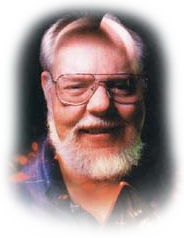
I have two player memories to share.
One
At one time I was harassing my players with an outsider. He could communicate telepathically and he was invisible. After being seriously creeped out by his very tempting insinuations and teasing they pulled back from the caves. Armed with what they had learned they decided to study spells, use potions and make a tactical plan for positioning and striking with maximum efficiency. This time when they entered the caves the outsider soon saw they meant to kick ass, and perched itself on top of a tall building and started to call down flaming rain and hellfire upon the characters. They now had protections against fire and at once ran their tactical plan like clockwork. One guy now equipped for flying raced towards the demon with a tool of dismissal from their plane. Everyone was exactly where they should be, and the dismissal worked at first try. The outsider was gone, just like that! They spend quite some time to make sure and they secured the caves. Player skill and planning.
Two
In another dungeon the party was encountering a tribe of hyenakin, gnolls. After having had these doggies ask them for toll every time they passed, one player decided to end it. He challenged the pack leader, the alpha male, to a duel. He won, and from now on had a tribe of his own to call upon. Quite cool. They ended up building him a tavern outside the dungeon, getting revenue for the party.
I have two player memories to share.
One
At one time I was harassing my players with an outsider. He could communicate telepathically and he was invisible. After being seriously creeped out by his very tempting insinuations and teasing they pulled back from the caves. Armed with what they had learned they decided to study spells, use potions and make a tactical plan for positioning and striking with maximum efficiency. This time when they entered the caves the outsider soon saw they meant to kick ass, and perched itself on top of a tall building and started to call down flaming rain and hellfire upon the characters. They now had protections against fire and at once ran their tactical plan like clockwork. One guy now equipped for flying raced towards the demon with a tool of dismissal from their plane. Everyone was exactly where they should be, and the dismissal worked at first try. The outsider was gone, just like that! They spend quite some time to make sure and they secured the caves. Player skill and planning.
Two
In another dungeon the party was encountering a tribe of hyenakin, gnolls. After having had these doggies ask them for toll every time they passed, one player decided to end it. He challenged the pack leader, the alpha male, to a duel. He won, and from now on had a tribe of his own to call upon. Quite cool. They ended up building him a tavern outside the dungeon, getting revenue for the party.
Thursday, December 31, 2009
Best and worst of 2009
At the end of 2009, I have taken a few moments out of the family holidays to summarize the year. Tomorrow I will post my vision for the new one. Here we go.
Worst all categories – Outlaw Press
Thinking back on 2009, nothing stand out as clear as the scandal of Outlaw Press. While D&D have seen some support for multiple editions all through the years, T&T have fallen to the wayside since the late eighties. One fan publisher have, using POD technology, been fanning the flame and been publishing a steady stream of adventures and rules. You can see that for us T&T fans, that fan publisher was our pride and a focus of interest and fan writing. Then it turns out that James Shipman, the publisher in question, had stolen materials he published, and reprinted without permission. Also, nobody knows where that art he used came from, and it sure have been stolen, by Shipman or his source. Shipman do have some bad habits so who knows?
Hopefully it will end up in court finally and some sort of restitution made. It's not exactly strange that all that pride and focus of interest have soured, and while the feelings are still strong they have changed flavour. I could strangle that guy! But this is for the lawyers to take care of, and I only hope lack of funds wont stop justice from being served.
Hopefully it will end up in court finally and some sort of restitution made. It's not exactly strange that all that pride and focus of interest have soured, and while the feelings are still strong they have changed flavour. I could strangle that guy! But this is for the lawyers to take care of, and I only hope lack of funds wont stop justice from being served.
Worst game experience – Primetime Adventures
Now, this is an odd one. PTA is not a bad game per se, but it is my worst game experience this last year. The mechanics are well crafted to emulate the way a story evolves in a tv series. But, if you had strong Traits that tied your character into conflicts and relations with the other characters, by necessity all Traits would be used in every scene and conflict. It made the Traits mechanically useless and all conflicts always had the same chance of success. Was this really the intention?
But, what make PTA my worst game is that I played it for social reasons and not because I liked the game. I hated it, but wanted to hang out with my friends, and I really wanted to have a game group to play with. If you wonder why one of your players is kind of vacant and don't seem to really engage with the group, check to see if he might be hanging around for social reasons and would prefer to play another game. I got to play another game later on.
Saddest news – Dave Arneson (and way to many more)
Since our hobby is fairly young, we still have our founding fathers among us. Or at least a few of them. A sad effect is that the hobby have left the toddler stage, and some of the Great Old Ones are getting old. While the death of Dave Arneson inspired me to share my love, hopefully other more joyful happenings can inspire us to share as well.
Best Game – T&T
For me this was the year when Tunnels & Trolls became my gaming focus. Having read about old school gaming, about Megadungeons and how it was the hobby was shaped in those elder days of yore I managed to get some people together to actually play. That, and the fact that the game works so well for what it is intended to do, won it a place in my heart as a favourite.
Best Adventure – The Fane of St Toad
While the death of Dave Arneson was a blow to us all, the memorial session of Mike Curtis' froggy adventure The Fane of St Toad was very emotional for me, but in a good way. It was a victory for T&T as a simple a quick system for on the fly conversion of adventurers written for other games, and a victory of mood and glorious combat against insurmountable odds. Exploding frogs, who can resist that? Thanks Mike! Thanks Dave!
Best news – the OSR publishing effort
Once the hobby was all about making shit up. Then the idea got lodged in the brains of people, as witnessed by Tim Kask, that the company they bought the game from had better ideas than they. Nothing exactly helped people get out of that mindset when Gary Gygax wrote his rants about the true way to play D&D. When I first laid eyes on Pegasus Magazine, and other publications from Judges Guild, I loved them all. That cheap newsprint and the oozing feeling of hobbyists pouring out their love for the game reached that soft spot. Seeing that going on once again, this time as a pdf freebie online, a cheap booklet available from Lulu or somebody's webpage or blog is heartwarming. The publishing efforts in the OSR is one of my best memories of 2009.
Best Game supplement – Fight On! Magazine
Having said that, Fight On! Magazine must be mentioned as a inheritor of Pegasus or Dungeoneer. That rag have the same kind of wild and crazy mix of just about anything. I love it.
Subscribe to:
Posts (Atom)


 Posts
Posts

